Roof Damage After Heavy Rain & Storms in the UK: Signs to Spot and What to Do
Prolonged rainfall, strong winds, and sudden pressure changes can expose weaknesses that are not visible during dry conditions. Even roofs that appear sound can suffer damage at fixings, junctions, flashings, or drainage points, allowing water to enter the roof structure.
Roof damage after storms is often progressive rather than immediate. Small failures can worsen over days or weeks, leading to internal damp, insulation saturation, timber decay, and costly structural repairs. Identifying storm damage early is critical to preventing long-term deterioration.
Why Storm Damage Is Often Missed
Storm-related roof damage does not always result in immediate leaks. Water can enter at one point and travel through roof layers before becoming visible inside the property. Pitched roofs may channel water along battens or underlay, while flat roofs can trap moisture within insulation layers.
Common reasons storm damage goes unnoticed include:
Water ingress occurring beneath tiles or membranes
Leaks appearing days after rainfall
Damage hidden behind flashings or parapets
Saturated insulation holding moisture without visible dripping
Early inspection is essential after periods of heavy rain or high winds.
Internal Warning Signs After Heavy Rain
Internal symptoms are often the first indication of roof failure. These signs should never be ignored.
Look for:
Water staining on ceilings or upper walls
Damp patches that darken after rainfall
Peeling paint or bubbling plaster
Mould growth in lofts or upper rooms
Musty smells indicating trapped moisture
Wet or compressed loft insulation
Condensation should not be assumed without inspection. Persistent or localised damp following rain often indicates water ingress rather than humidity.
External Signs of Storm Roof Damage
External checks can reveal obvious storm-related issues, but should only be carried out from ground level unless performed by a professional.
Key indicators include:
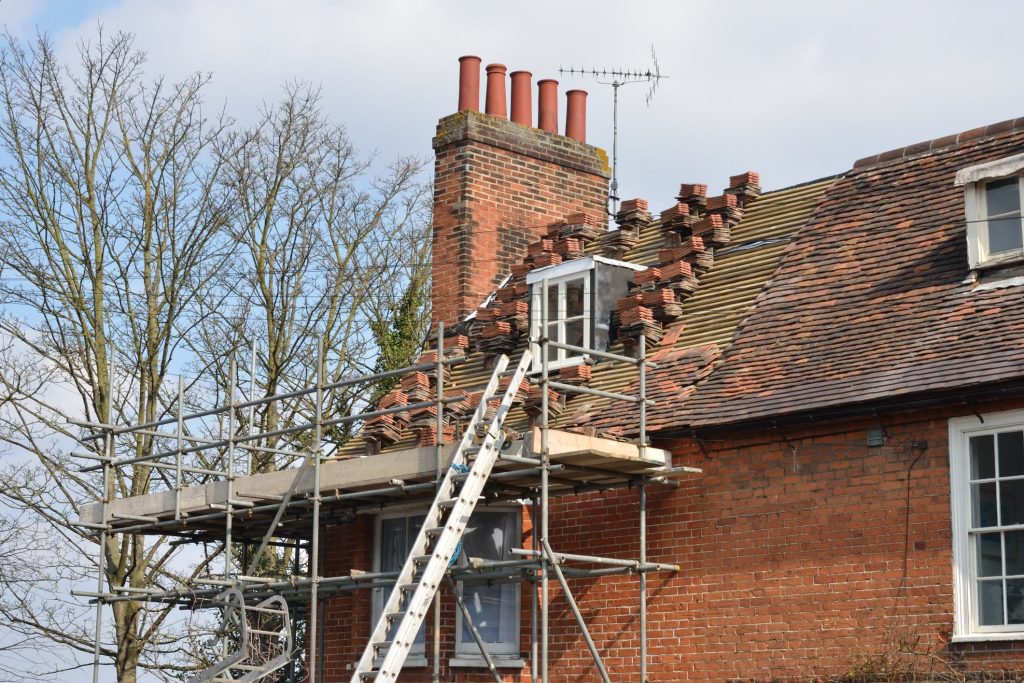
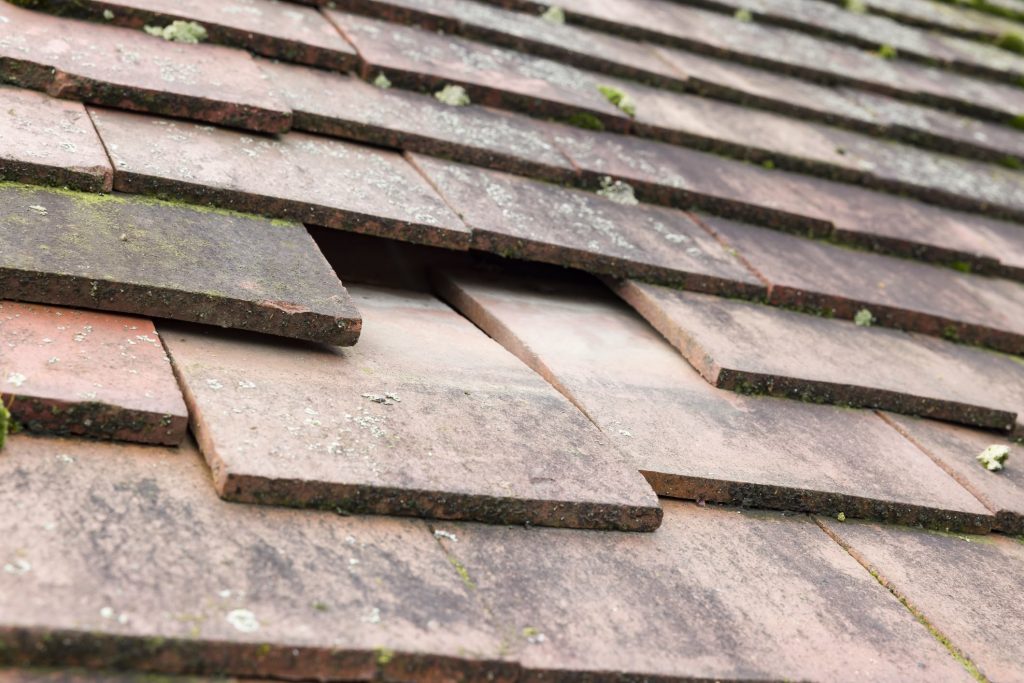
Slipped, cracked, or missing tiles
Displaced ridge tiles or loose ridge mortar
Lifted lead flashing around chimneys or walls
Debris buildup in valleys or gutters
Sagging gutters or overflowing downpipes
Ponding water on flat roofs after rainfall
Wind uplift is a common cause of tile movement, particularly on older roofs or where mechanical fixings have weakened.
If you need urgent assistance, visit our storm damage roof repairs page to contact our roofing experts.
Flat Roof vs Pitched Roof Storm Risks
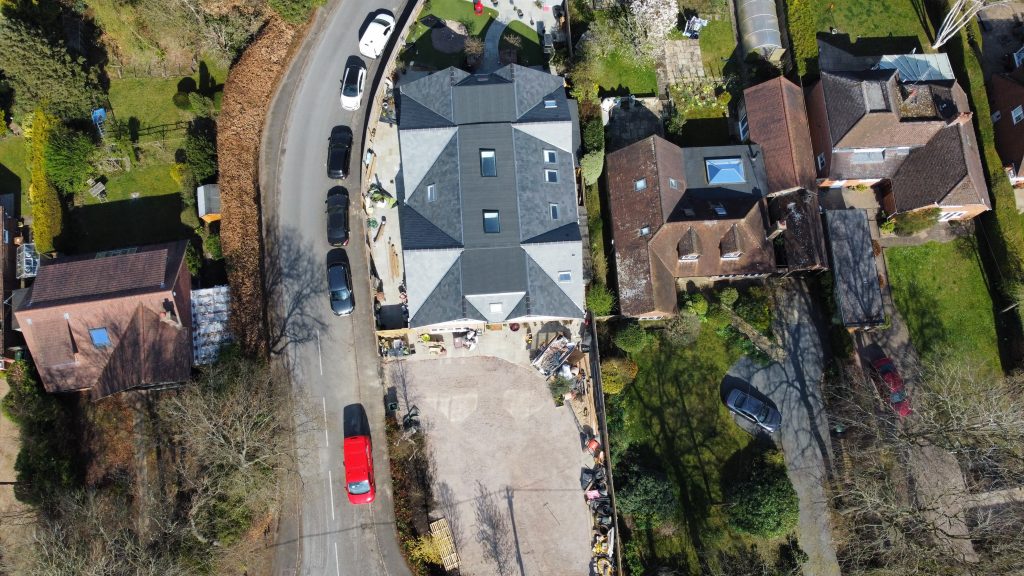
Different roof types respond differently to heavy rain and storms.
Pitched Roof Risks
-
Wind uplift loosening tiles or slates
-
Failed underlay allowing wind-driven rain
-
Flashing separation at chimneys or abutments
-
Ridge and hip failures due to mortar fatigue
Flat Roof Risks
-
Standing water caused by insufficient falls
-
Blocked outlets leading to membrane stress
-
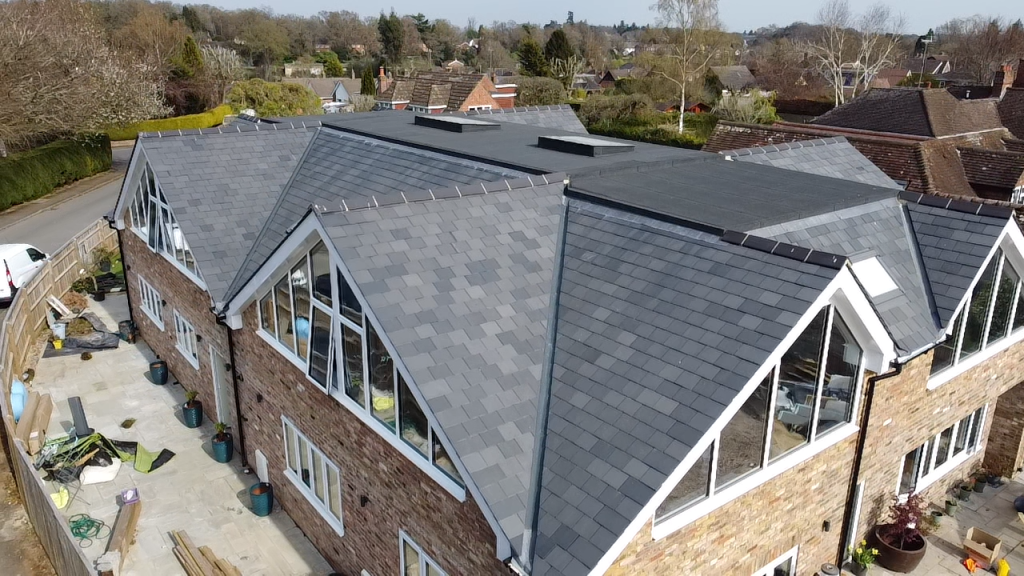
Seam separation on felt or single-ply systems
-
Water ingress through aged or cracked membranes
Flat roofs are particularly vulnerable during prolonged rainfall, where small defects can allow water to penetrate insulation layers.
When to Call Emergency Roofers
Emergency roofing services are required when there is an immediate risk to the building or occupants.
Urgent situations include:
-
Active internal water ingress
-
Missing tiles or exposed roof structure
-
Storm-damaged flashing allowing ongoing leaks
-
Collapsed roof sections or sagging ceilings
-
Water entering electrical areas
Emergency roofers focus on stabilisation, temporary weatherproofing, and preventing further damage before permanent repairs are carried out.
Official UK Met Office weather warnings provide objective confirmation of heavy rain, strong winds, and storm conditions, helping validate when roofing damage is likely and supporting accurate inspections and insurance reports.
Insurance claims rely heavily on documentation and professional assessment. Insurers typically require evidence that damage was caused by a storm event rather than wear and tear.
Key factors insurers assess:
-
Clear signs of sudden storm-related damage
-
Photographic evidence of defects
-
Inspection reports from qualified contractors
-
Records of temporary mitigation work
-
Timelines showing when damage occurred
Prompt inspection and documentation significantly improve claim outcomes.
Repair vs Overhaul After Storm Damage
Not all storm damage requires a full roof replacement. The correct solution depends on the extent of failure and the remaining lifespan of the roof.
Repairs may be suitable when:
-
Damage is localised
-
Roof structure remains sound
-
Materials are still within service life
Overhauls or replacement may be required when:
-
Multiple defects are present
-
Insulation has been saturated
-
Underlay or deck has failed
-
Repairs are becoming frequent
Professional advice ensures cost-effective decisions without unnecessary work.
For structured repair solutions, see
/repairs-overhauls/
Why Post-Storm Roof Inspections Matter
Many homeowners wait until visible leaks appear before acting. By this stage, water may already have damaged insulation, timbers, or internal finishes.
Post-storm inspections help:
-
Identify hidden damage early
-
Prevent secondary internal damage
-
Support insurance claims
-
Extend roof lifespan
-
Reduce long-term repair costs
Routine inspections after severe weather are a practical preventative measure.
Book a Professional Roof Inspection
Storm damage does not always announce itself immediately. Subtle defects can escalate quickly if left untreated.
If your property has experienced heavy rain or high winds, a professional inspection provides certainty and protection. Early intervention is the most effective way to prevent avoidable repair costs and structural issues.
CRS Roofing delivers thorough inspections, clear reporting, and reliable repair solutions across Berkshire and surrounding areas.
Book your roof inspection today and protect your property with expert assessment and guaranteed workmanship.