

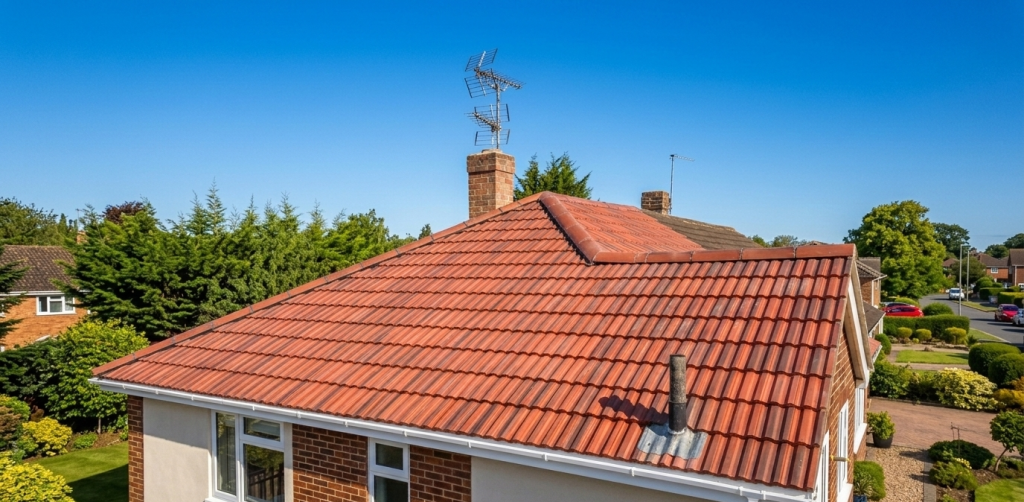
You notice a damp patch on the ceiling. Or a tile that’s slipped. Or perhaps the gutters are starting to sag. Your first instinct is worry, and that’s completely understandable. Your roof is the one thing standing between your home and the elements, and when something looks wrong, it’s hard to know whether to reach for the phone immediately or add it to a list for another day.
Here’s the truth: not every roofing issue is an emergency. But some absolutely are, and confusing the two can cost you far more in the long run.
This guide will help you understand the difference, so you can make the right decision for your home with confidence, rather than anxiety.
Urgent: Issues That Need Immediate Attention
Some roofing problems cannot wait. If you spot any of the following, you should contact a professional roofer as soon as possible, ideally one who offers emergency call-outs.
Active leaks and water ingress
If water is making its way into your home right now, this is an emergency. Water doesn’t stay where it lands; it travels through timber, insulation, and plasterwork, and it doesn’t take long for a small leak to become a significant structural problem. Damp and mould caused by water ingress poses a genuine risk to health, particularly for children and those with respiratory conditions. An active roof leak needs to be located and made watertight without delay.
Storm damage: missing tiles, exposed felt, or structural impact
After a period of strong winds or heavy rain, your roof may have sustained damage that isn’t immediately obvious from inside the house. Missing or dislodged tiles leave the roof deck and underlying felt exposed to the weather. The Met Office regularly records wind gusts across Berkshire that are more than capable of lifting poorly secured tiles or ridge caps. If you can see daylight through your loft, find debris in your garden, or notice tiles have shifted, don’t wait. Exposed roofing deteriorates rapidly once the weatherproofing layer is compromised.
Flat roof membrane failure or standing water
Flat roofs require particular attention after bad weather. If water is pooling and not draining, or if you can see the membrane has lifted, split, or blistered significantly, this needs prompt action. Prolonged ponding accelerates deterioration and, in serious cases, can add enough weight to stress the underlying structure. Flat roof maintenance is one of the most commonly neglected areas of property upkeep and the consequences of delay are often disproportionately costly.
Chimney instability or visible structural damage
A chimney that is visibly leaning, has lost significant mortar, or has sustained cracking after a storm is a safety hazard, not just a cosmetic one. Falling masonry is a serious risk to anyone below. Structural instability in any part of a building must be assessed and made safe promptly. Do not ignore a chimney that doesn’t look right.
Can Wait — But Don’t Ignore It: Issues to Plan In
Not every roofing issue demands immediate action, and a good roofer will always tell you honestly when something can be safely scheduled rather than rushed. That said, “can wait” does not mean “can be forgotten.” These issues will worsen over time if left unattended.
A few slipped or missing tiles with no active leak
If a tile or two has moved but there’s no water ingress and the felt beneath appears intact, this can typically be booked in as a planned repair rather than an emergency. Keep an eye on it, particularly ahead of wet or windy weather, and get it addressed within a few weeks. Left over multiple seasons, even a small gap in the tile coverage can allow moisture to work its way in gradually.
Deteriorating fascias, soffits, or guttering
Sagging gutters, cracked fascia boards, and blocked or leaking downpipes are not headline emergencies, but they matter more than most homeowners realise. When gutters fail to carry water away properly, it spills down external walls and can cause damp penetration at the foundations over time. Poor drainage as one of the most common contributors to avoidable damp problems in UK homes.
Minor chimney repointing or flashing wear
If the mortar around your chimney is beginning to crumble, but there’s no structural movement and no active leak, this sits in the “plan it in” category. Flashing that has lifted slightly at the edges is similar: worth monitoring and scheduling, but not a reason to panic. Left for a year or two, however, these issues tend to escalate into the urgent category, so it’s wise to act before the season turns wetter.
An ageing roof approaching the end of its lifespan
If your roof is looking tired, showing widespread wear, or is simply very old, the right next step isn’t an emergency repair, it’s a professional assessment to understand whether targeted repairs or a full replacement makes more sense financially and practically.
A Simple Rule of Thumb
When you’re unsure, ask yourself two questions:
Is water actively getting into my home right now? If yes, act today.
Is there a structural or safety risk? If yes, act today.
If the answer to both is no, you’re most likely dealing with a planned repair. The sensible next step is a professional inspection, which will give you clarity, a timeline, and an accurate quote without the stress of guessing.
You Don’t Have to Figure This Out Alone
Roofing problems are stressful. But the confusion around how serious something is doesn’t have to be. With the right guidance, you can move from worry to a clear plan and protect your home without overspending or underreacting.
At CRS Roofing, we’ve spent over 15 years helping homeowners across Reading and Berkshire do exactly that. We’ll give you an honest assessment of what your roof actually needs, when it needs it, and what it will cost with no unnecessary upselling and no vague answers.
Whether you need an emergency call-out today or simply want a professional set of eyes on a concern that’s been nagging at you, we’re here to help.
Request a free quote at crsroofing-reading.co.uk — or call us on 0118 947 7437. We respond to all enquiries within 12 working hours and provide quotes within 72 hours.
Your home deserves a roof you can trust. And you deserve a roofer who’ll tell you the truth.

